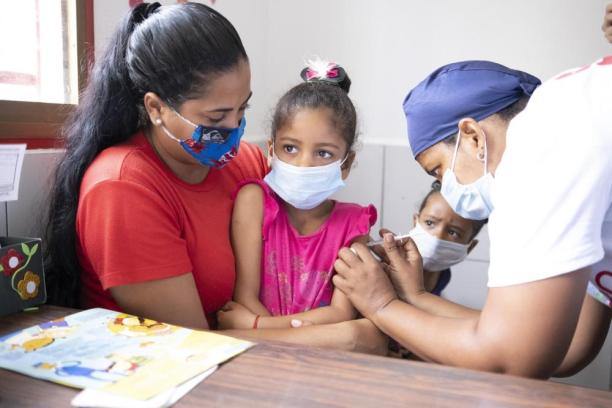
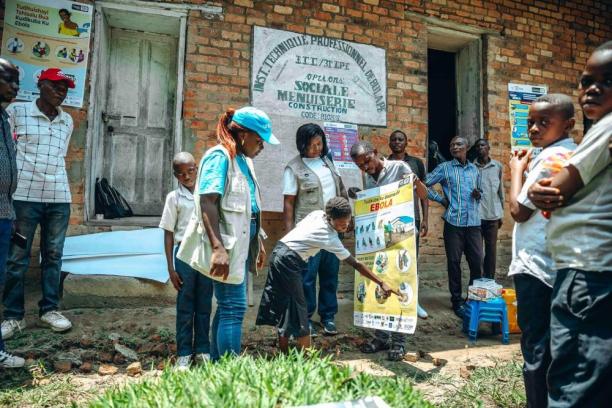
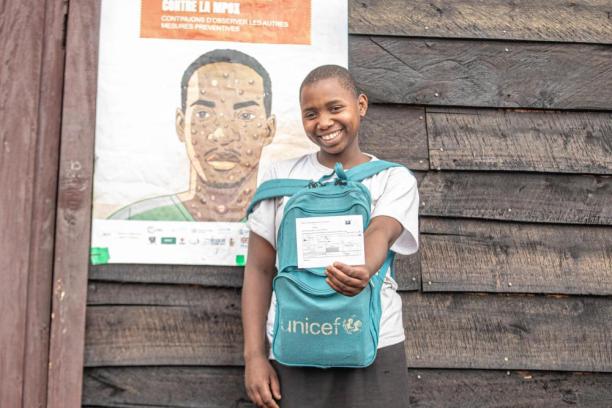
Children suffer first and suffer the most during public health emergencies such as Ebola, cholera, polio, mpox or COVID-19.
Since 1980, the number of yearly disease outbreaks has tripled, due to factors such as climate change, displacement and protracted conflict. Public health emergencies affect every facet of children’s lives – from worsening existing vulnerabilities to disrupting essential, life-saving services like routine immunization, nutrition and education.
UNICEF is involved each year in more than one hundred responses related to public health crises. We work to ensure that outbreak response strategies are inclusive of children, women, and other vulnerable groups and adapted to their specific needs, particularly in contexts where public health infrastructure may be weakened.
How UNICEF helps children affected by health emergencies
UNICEF aims to prevent outbreaks and to detect and respond to them early – before they lead to high mortality and widespread disruption. We focus on meeting the needs of the most vulnerable populations while also focusing on controlling outbreaks, limiting their spread and mitigating the socio-economic consequences for affected communities, particularly women and girls.
At the onset of an emergency, UNICEF activates its response immediately, often within hours. With a presence in 190 countries and the world’s largest humanitarian warehouse network, UNICEF can rapidly mobilize supplies and experts to reach children and families in both urban centres and hard‑to‑reach communities. Emergency teams work closely with local responders to assess needs and coordinate relief efforts.
UNICEF’s immediate response to health emergencies often include:
- Deploying pre-positioned supplies, including personal protective equipment, vaccines, hygiene kits and tents to establish treatment centres
- Mobilizing communities and empowering them with accurate information and tools to prevent disease spread and access services
- Strengthening and expanding services for immunization and infection prevention.
Beyond the immediate emergency phase, UNICEF’s long-term response focuses on strengthening health systems and community resilience. This includes:
- Working with governments to strengthen health systems that can contain outbreaks before they escalate
- Supporting the rebuilding of health, education and water infrastructure
- Providing children who have lost family members with sustained psychosocial care
- Helping those recovering from illness reintegrate without stigma
Your support can make all the difference
When emergencies strike, speed and flexibility save lives. Your donation to UNICEF’s Children’s Emergency Fund provides the flexible funding UNICEF needs to respond immediately to health emergencies, reaching children faster, scaling up assistance more efficiently and directing resources to where they are needed most.
Because these funds are flexible, UNICEF can prepare before emergencies hit by pre‑positioning life‑saving supplies, training emergency teams and strengthening local response capacity. When a crisis occurs, this funding allows UNICEF to scale up quickly, delivering pre-positioned supplies without delay.
Your support helps ensure that children affected by health emergencies receive timely, life‑saving assistance from the first hours and throughout recovery.