Crisis in Lebanon
Children caught in conflict need urgent humanitarian assistance

The situation in Lebanon has continued to deteriorate drastically due to the broader Middle East conflict. Hostilities have intensified, resulting in the deaths of over 1,739 people—including 130 children—since March 2. In just three weeks, more than 390,000 children have been forced from their homes, an average of at least 19,000 girls and boys displaced every single day—the equivalent of hundreds of school buses filled with children fleeing for their lives every 24 hours.

All children have the right to live without the threat of conflict and violence. UNICEF urgently calls on all parties to uphold their obligations under international law and to ensure the protection of civilians, especially children.

The current escalation has forced schools to close across the country, disrupting education for an estimated 1 million children. Water distribution networks, reservoirs, and other critical infrastructure have been damaged, affecting more than 23,000 people. Children and families are living under the constant threat of attacks, increasing risks to their physical safety, mental well-being and access to essential services.

Help us provide urgent, humanitarian assistance to children in Lebanon

How UNICEF is responding to the crisis in Lebanon

UNICEF has worked to support and protect the children of Lebanon for over 75 years, and we are ramping up our efforts to ensure children and families affected by the crisis get the humanitarian assistance they urgently need.

With the help of our donors and partners, we have been working tirelessly in Lebanon to support displaced children and families, including:
  • Working with communities to establish temporary learning spaces in safe and accessible locations 
  • Delivering essential medications and medical supplies 
  • Pre‑positioning nutrition supplies with partners, such as high‑energy biscuit (HEB) packages, ready‑to‑use complementary food jars and energy‑protein nutrition supplements to prevent wasting 
  • Delivering emergency water, sanitation and hygiene support in shelters, including repairing existing facilities and installing new showers and latrines 
  • Distributing clothing kits and sleeping bags in shelters
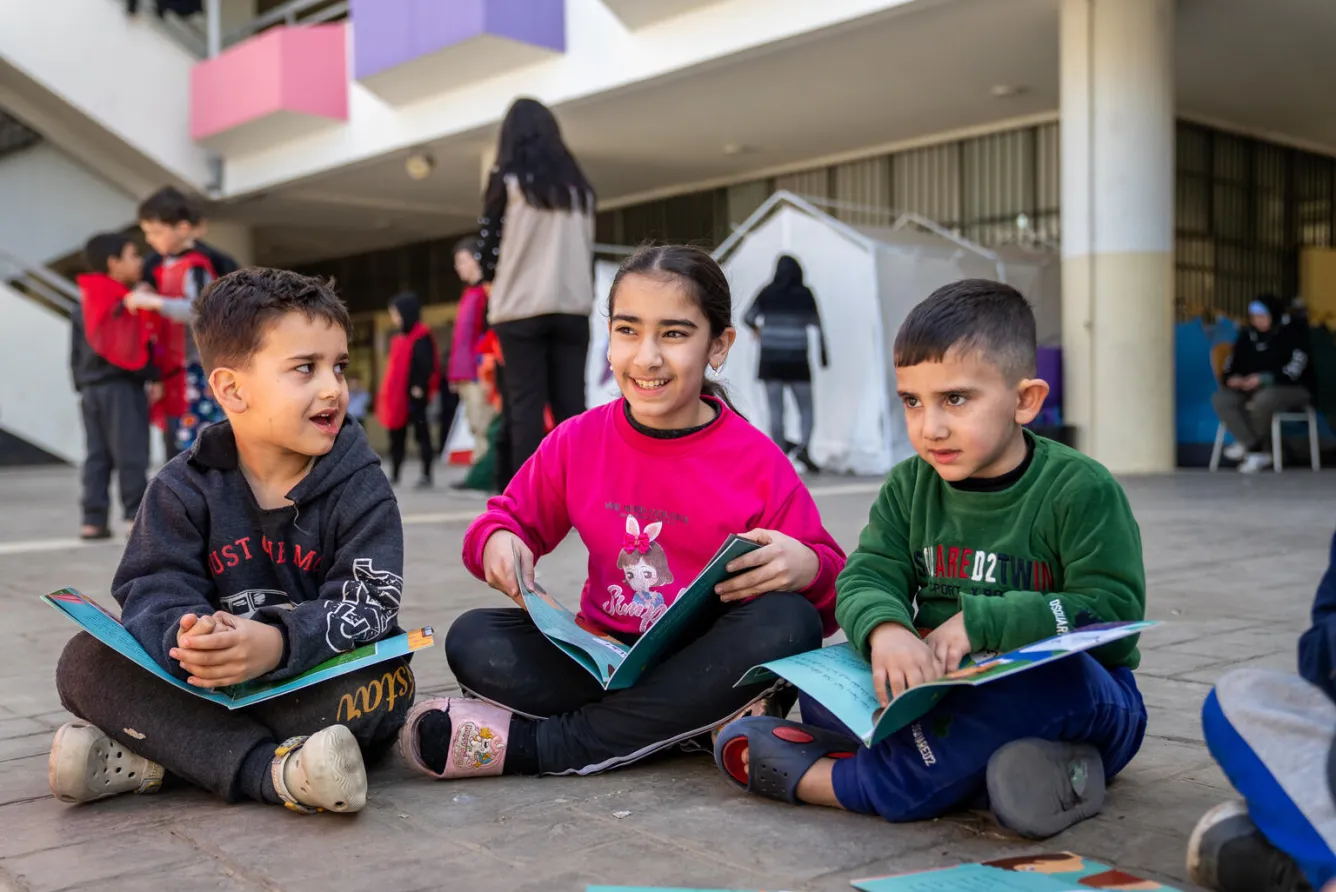
Three children sitting on the ground outdoors, each with an open book on their laps.
Eleven‑year‑old Asil (centre) sits with friends, reading books together, at Omar Faroukh school in Beirut, where hundreds of internally displaced people are currently staying after fleeing violence.

Since the escalation of hostilities, UNICEF has:

  • Distributed 607 education kits across 104 shelters, reaching 30,350 children with learning supplies, recreational materials, and LEGO play boxes
  • Supported universal remote learning for all public school students through multiple digital platforms, reaching 40,000 teachers and 390,000 students
  • Supported the delivery of more than 140 tons of essential medications and medical supplies to primary healthcare satellite units and government hospitals
  • Provided integrated nutrition and early childhood development services through Makani centres in host communities, ensuring continuity of care and expanded coverage beyond shelter settings
  • Supplied over 280,000 litres of fuel to water points and repaired 42 water systems and six wastewater systems, directly supporting the continuity of public water supply for more than 2,650,000 people

Please donate to help support children and families in Lebanon