


Dedicated staff provide much-needed healthcare for some of Ethiopia’s remotest communities

The road we were on abruptly ended. Our driver did his best to prepare us for what would follow over the next hour. But Ethiopia’s rocky landscape tests the best driver (and the strongest stomach.)
Even with a seatbelt, your body leaves your seat at times; bouncing up as the tires carve a path through the terrain. I tried to imagine how long it would take to get used to this as a daily commute. The reality for UNICEF's health and nutrition workers providing care in this remote area.
We were in the Afar desert, in northeast Ethiopia. One of the most desolate and hottest places on Earth. Less than 1 inch of rainfall lands over the volcanic soil each year making life difficult to sustain by any measure.
And yet, human life has its origins here. The bones of “Lucy”— the oldest known human ancestor dating back 3.2 million years—were found nearby. A UNICEF-supported health worker named Seid met us once the Jeep stopped. He greeted us referencing this shared history, grinning, “Welcome to your home! Everyone from everywhere is from here.”
Seid worked for one of the 14 UNICEF mobile health clinics that support children and their families. Every day, each week, one clinic travels to a specific remote location administering the only health services that most residents will ever know.
By the time we arrived, about 100 people had already gathered near a few trees offering shade. This setting served as an open-aired waiting room, pharmacy, doctor’s office, emergency room, disease surveillance outpost and treatment centre all in one.
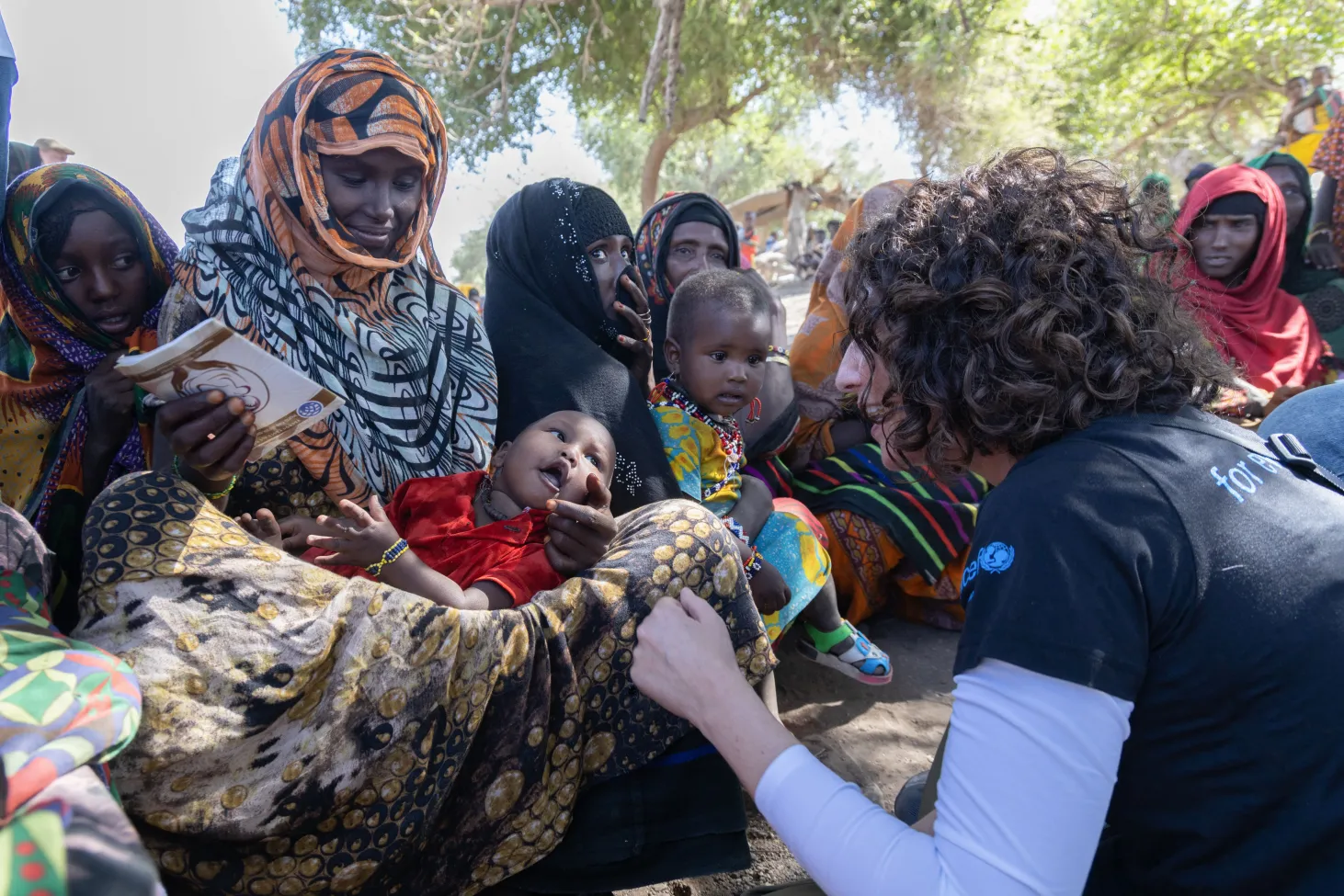
The range of needs was staggering. Several children were being treated for malaria and malnutrition – this region has Ethiopia’s highest rates for both. I talked to a mom as her daughter received her second measles vaccination. An elderly woman was brought here by her family; the immense pain she was carrying was collapsing her.
In a more private tent, moms received pre- and post-child delivery care. Women and girls also received gender-based violence support. Female genital mutilation rates are as high as 91% in this region.
All these moments and needs— from treatments and supplies to delivering critical services— were packed in/out daily by this UNICEF-supported mobile clinic. It’s hard to overstate the impact of these roaming centres in a region with some of the lowest health and nutrition outcomes in all of Ethiopia.
The team meeting these needs were among the most dedicated UNICEF workers I’ve ever met. A tenderness in the care they offered. A commitment to make an impossible journey every single day. And a resilience to keep going in the face of global aid cuts making their work harder.
What moves with these clinics is more than supplies and services. It’s a commitment to show up for children no matter the odds or distance. And because of UNICEF and our supporters, we’ll continue to drive to the furthest, most difficult places on earth. Because EVERY child deserves it.