


Your gifts can help children like Princess in Zimbabwe

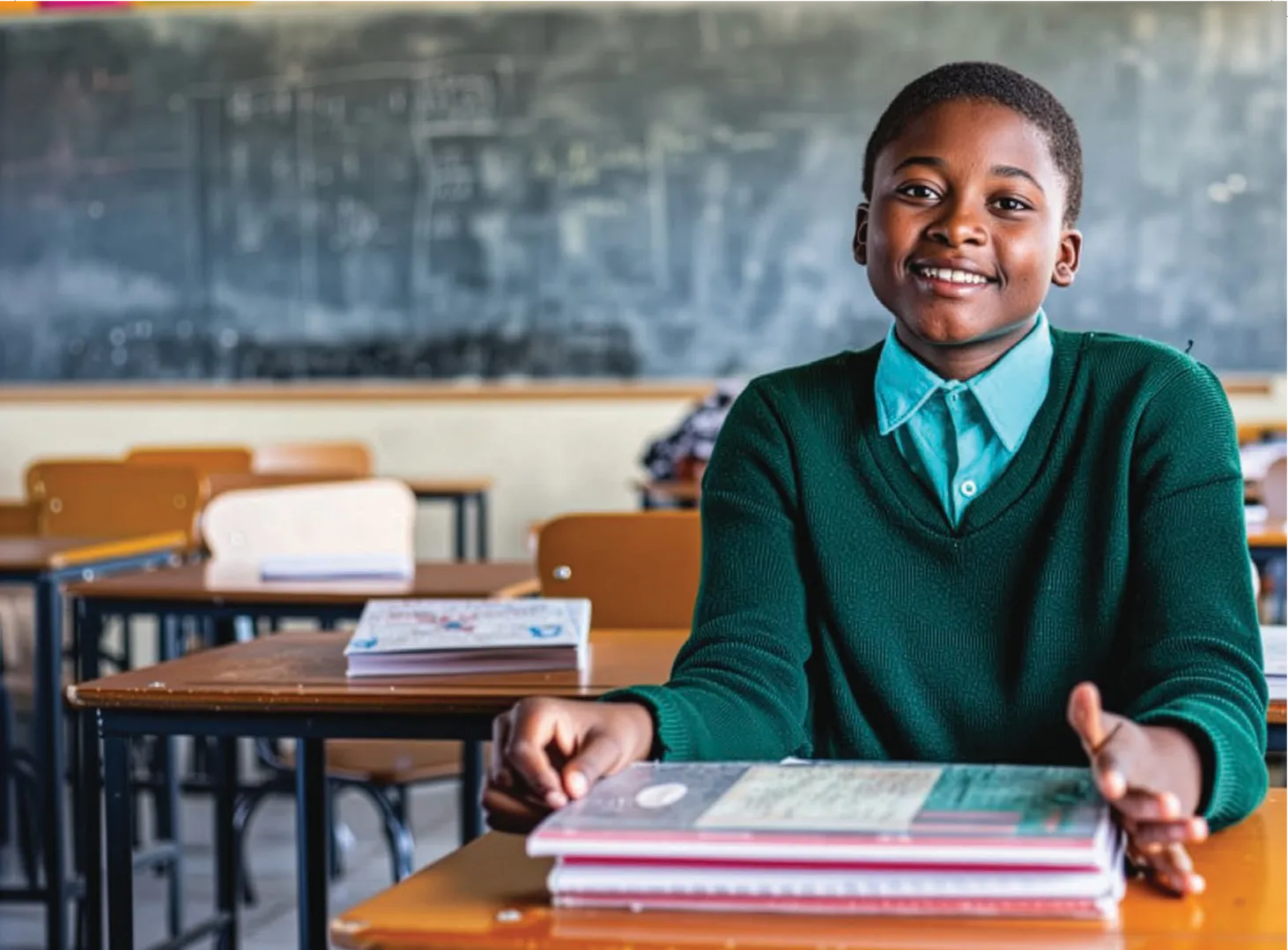
In Zimbabwe, too many girls grow up knowing exactly what’s out of reach.
Opportunities in science, technology, engineering, and math (STEM) remain few and far between, especially for adolescent girls. Long-standing gender norms, lack of basic school supplies, and classrooms unequipped to support girls in these fields create barriers that are hard to break. The numbers are telling: only 19% of girls graduate from STEM subjects compared to 39% of boys. Even fewer go on to STEM careers.
With the support of people across Canada, UNICEF has been working to change this reality in Zimbabwe. We’ve training female STEM teachers to use teaching methods that address girls’ specific needs and remove bias – making classrooms more welcoming and inclusive. We’ve also hosted STEM fairs and role-model sessions, launched school clubs and community outreach programs, all with one goal: to create spaces for girls to thrive in STEM and shape their futures on their own terms.
One of these girls is Princess.
At only 14, Princess has already faced challenges most adults never will. After her parents divorced, she was moved between relatives, her education often interrupted. The loss of her uncle to gun violence shook her deeply.
She once dreamed of becoming a gunsmith, not because she loved science, but because she didn’t see another way to reclaim her power. “I was angry and hurt,” she remembers. “I thought that if I could make my own weapons, I would get justice for my uncle and myself.”
Then came something different: the chance to join a STEM club at her school, supported by UNICEF.
There, Princess discovered a place where she could be curious, creative, and heard. Her group built an eco-friendly grass cutter, and together they showcased it at the STEM Fair, where students from various schools presented their innovations. It was the first time Princess saw science as a way forward, not backward.
“The STEM Fair opened my eyes to a future beyond anger,” she says. “I now want to be a geologist.”
Now, Princess dreams bigger. And she’s not alone.
The impact of that opportunity spread quickly. Girls who once sat at the back of the classroom unsure of themselves are now raising their hands. They’re dreaming of becoming engineers, doctors, scientists. They see a future filled with possibility.
More importantly, Princess has found peace. She’s chosen education over vengeance. She now mentors other girls who’ve experienced loss, urging them to look ahead, not behind.
“If you seek revenge, you could end up in prison. And in doing so, destroy the future you were meant to have.”
This is the kind of transformation that becomes possible when girls are supported with the tools they need to succeed—textbooks, backpacks, clean water, menstrual hygiene supplies, safe spaces to learn, and inspiring mentors who believe in them.
UNICEF Canada’s President & CEO, Sevaun Palvetzian, witnessed this impact firsthand while attending a STEM fair:
“The girls delivered physical presentations made with science kits, presentations projected from laptops, and crisp presentation skills to pitch their innovative ideas. They were led by teachers who are trained in STEM, mostly women, who motivate and guide their students to inspire them to lean into STEM and demonstrate how they can be successful with these skills in the future.”
When you choose to support girls’ education you help unlock the potential of young minds like Princess’s.
A brighter future begins with opportunity—and that future starts now.