Continuing to Deliver for Every Child

2025 Global Results
In 2025, global turmoil and compounding crises pushed children’s needs to record levels while the resources to help them dropped dramatically.
Despite the challenges, UNICEF continued to deliver – in crises and beyond. In 2025, our staff and partners responded to emergencies in more than 100 countries, reaching tens of millions of children with lifesaving health care, nutrition, immunization, education, protection, safe water and sanitation.
We achieved these results by being on the ground before, during and after crises hit, working side by side with communities and governments, guided by our commitment to every child’s right to survive and thrive.
See how we continued to stay and deliver for children through some of our key global results for 2025.
Unrestricted Funding
UNICEF relies on voluntary contributions to uphold our mission of reaching every child. Unrestricted funding – to be used flexibly for children wherever and whenever the need is greatest – played a critical role in helping UNICEF achieve results for every child in 2025.
When donors put their trust in UNICEF through unrestricted funding (also known as core resources or RR), this enables UNICEF to achieve the greatest impact for children by:
- Ensuring expert staff across all our program areas;
- Scaling up proven solutions and best practices for children globally;
- Leading and pioneering new ideas to respond effectively to complex children’s issues;
- Meeting children’s needs throughout childhood and adolescence;
- Being there before, during and after an emergency.
Thanks to the support of our donors and partners around the globe, the total amount of unrestricted income in 2025 was US$1.5 billion, accounting for 19 per cent of UNICEF’s total $8.1 billion global income.
Unrestricted funds do not flow to a single program or a single crisis. They are deployed to direct programs, institutional capacity for results and program excellence, and private sector fundraising – each making the others more effective. Together, they are how a contribution to unrestricted funding becomes impact at every level of a child's life.
The majority of unrestricted funds reach children directly through programs in the countries where UNICEF works, at regional level, and globally.
International Programs
With the support of our donors and partners in Canada and around the world, UNICEF achieved the following results for each of our program pillars in 2025:
Health and Nutrition
- 51.9 million children were reached with services for neonatal and childhood illnesses and 4.8 million health workers were trained.
- 3.2 billion vaccine doses were delivered to 103 countries, including introducing the malaria vaccine in 7 countries and the HPV vaccine in 12 countries, and more than 38.6 million children were vaccinated against measles.
- 255 million children in 54 countries were reached with services to prevent, detect and treat wasting, the most dangerous form of malnutrition.
- 423 million children under 5 were reached in 81 countries with interventions to prevent stunting.
- 158 million children and adolescents in 92 countries were reached with interventions to prevent anaemia, overweight and other forms of malnutrition.
- 7 million children, adolescents and caregivers were reached with mental health and psychosocial support by strengthening front-line health workforce capacity and connections between primary healthcare centres, schools, child protection systems and community platforms.
Education
- 27.8 million out‑of‑school children across 90 countries (nearly half in sub-Saharan Africa) were supported with access to education.
- 57 per cent of countries had inclusive and gender‑responsive education systems as of 2025, up from 47 per cent in 2022 – progress built on strong foundations in early childhood education and disability inclusion.
- More than 13.6 million children across 71 countries accessed education through digital platforms (such as the Learning Passport), and 14 governments produced accessible digital textbooks using open-source, AI powered tools provided by UNICEF, reaching nearly 2 million children.
- Governments in 98 countries were supported to integrate climate, energy, environment, green skills and disaster risk reduction into education systems, with 42 countries strengthening teacher development on climate literacy and sustainability.
Learn more about UNICEF’s work in education.
CHILD PROTECTION
- About 4.5 million children affected by violence were supported in accessing health, social work, justice, and law enforcement services across 112 countries.
- Over 894,000 girls and women in 19 countries accessed female genital mutilation prevention and protection services, more than doubling reach since 2022.
- Nearly 10.4 million adolescent girls in 50 countries benefited from child marriage prevention and care interventions.
- 64 per cent of children formerly associated with armed groups received protection or reintegration support.
- 46.7 million children, parents and caregivers were reached with mental health and psychosocial support services.
Learn more about UNICEF’s work in child protection.
Water, Sanitation and Hygiene
- Over 17 million people gained access to at least basic sanitation services, over 34 million to safe water, and over 15 million to basic hygiene.
- Over 5,500 schools and 2,800 health care facilities were supported to achieve a basic level of WASH service provision.
- Enhanced advocacy, policy engagement and technical assistance helped 99 countries – up from 69 in 2024 – make their national climate, environmental or disaster risk management policies address children’s needs.
- Renewable energy solutions expanded to 121 countries in 2025, with 1,767 solar-powered water systems installed in 70 countries.
Learn more about UNICEF’s work in water, sanitation and hygiene.
Social Protection
- 93 countries increased their social sector budgets. 89 countries expanded access to care and family-friendly policies, including subsidized childcare and paid parental leave.
- 69 countries strengthened gender-responsive social protection, and 80 countries strengthened disability-inclusive social protection.
- 76 countries strengthened local planning and governance capacities, while 20 improved urban policies and planning to improve child well-being in urban areas, including slums.
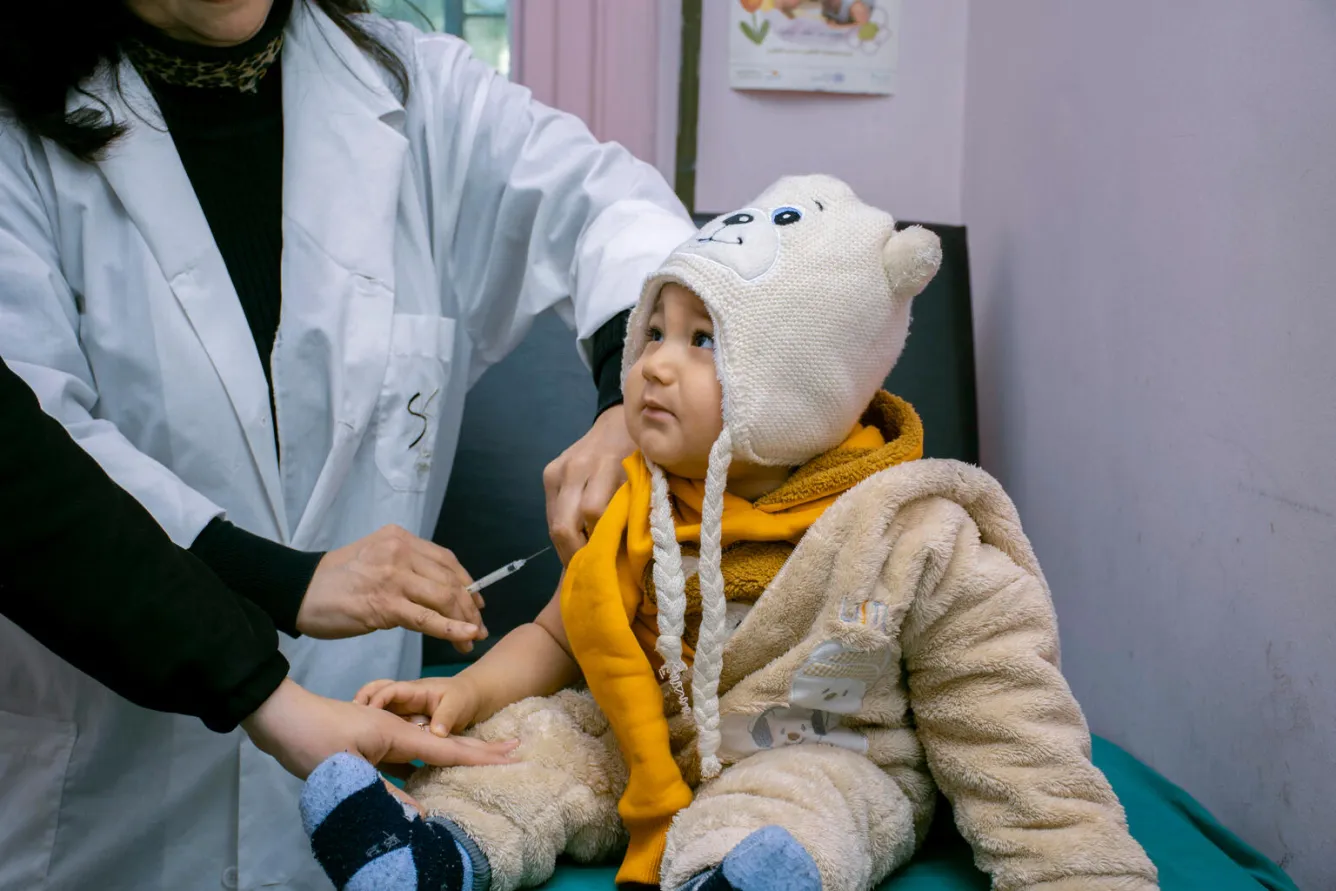
One-year-old Ghaith receives his routine vaccination at a health centre in Damascus, Syria. His mother, Inas, says: “Vaccination is important to protect my child from diseases.” In 2025, UNICEF helped deliver 3.2 billion vaccine doses to 103 countries.
Humanitarian Response
In conflict and disaster, children suffer first and suffer most. With nearly 80 years of experience, UNICEF knows how to reach children in need of urgent support, whether it’s through pre-positioned lifesaving emergency supplies, safe spaces, or providing psychosocial support.
UNICEF responded to 414 emergencies in 101 countries, including conflicts, disasters and disease outbreaks.
With the support of our donors and partners in Canada and around the world, UNICEF achieved the following results in humanitarian settings:
- Drinking water services for 36.2 million people;
- Measles vaccinations for 38.7 million children;
- Early detection and treatment of wasting and other forms of malnutrition, benefiting 98.8 million children under 5 years of age;
- Access to education for 9.1 million children and adolescents;
- Community-based mental health and psychosocial support services for 8.8 million children and families;
- Humanitarian cash assistance for 900,000 households.
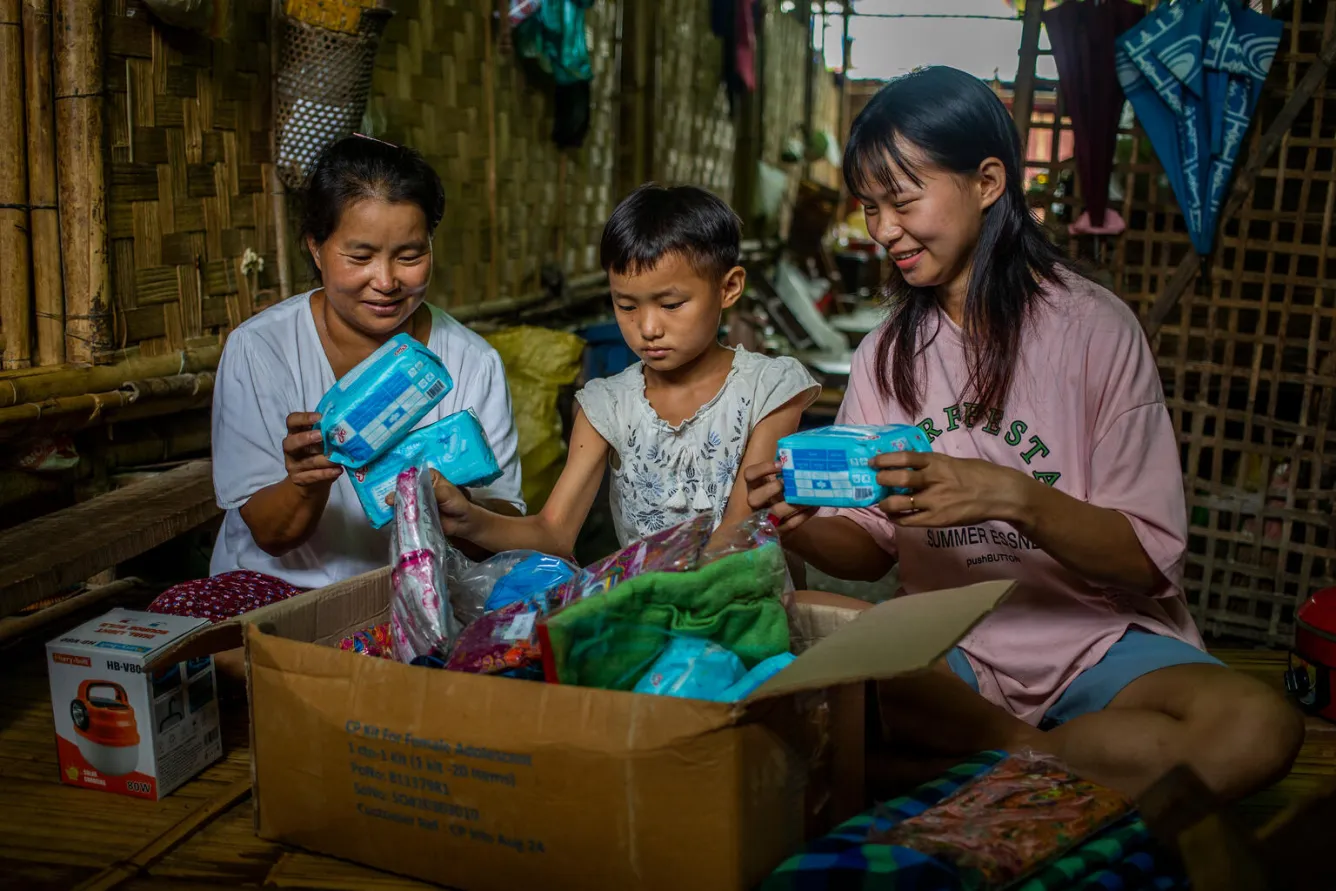
Kyang Sau, her younger sister, and their mother unpack a UNICEF child protection kit in front of their temporary shelter. In 2025, UNICEF responded to 414 emergencies in 101 countries, including the March earthquakes in Myanmar.
UNICEF Canada’s impact
UNICEF Canada advances UNICEF’s global mission through fundraising, advocacy and awareness in Canada. In 2025, with the help of our supporters across Canada, UNICEF Canada has been able to:
- Raise $85.2M to build a better world for every child.
- Raise $11.3M to assist children and families affected by the war in Ukraine.
- Mobilize $9.9M for emergencies, including Sudan, Lebanon and Gaza.
- Raise $1.8M at our galas in Calgary and Halifax, with all proceeds supporting UNICEF’s unrestricted funding to ensure help reaches children wherever the need is greatest.
- Reach 14.7M children with 23,038 lifesaving Survival Gifts®— representing critical items such as blankets and therapeutic food from the world’s largest humanitarian warehouse and local suppliers.
- Engage 3,182 Canadian youths as U-Reporters on issues that matter to them, like climate change and mental health, through U-Report, UNICEF’s digital polling platform.